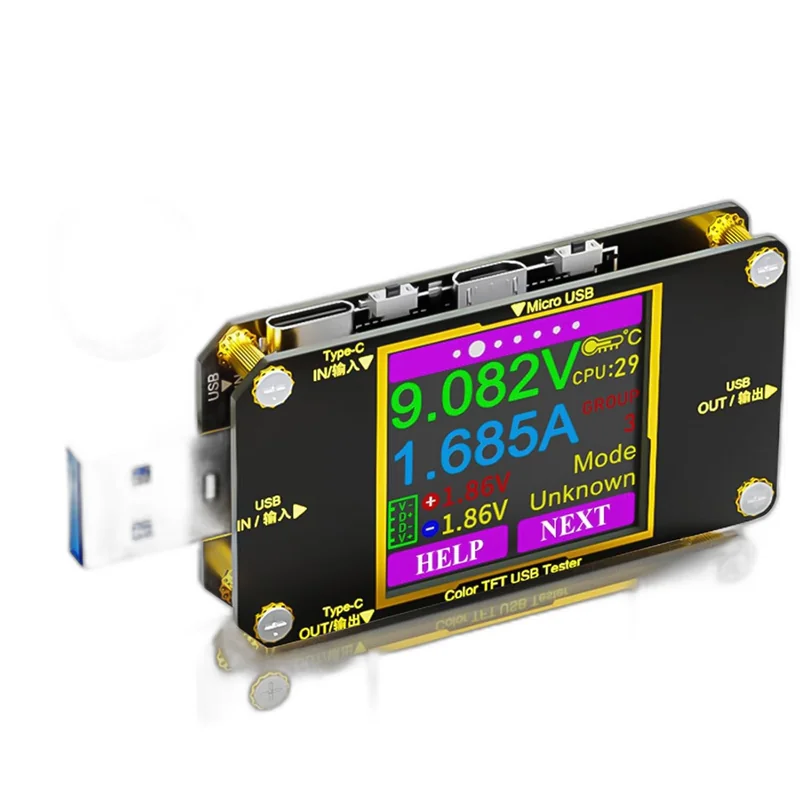
USB Power Meter / Load Tester
—NZ$29.90
Availability: Sold out
A USB power meter sits inline on a USB cable and displays voltage, current, power and accumulated energy, showing exactly what a device is drawing.
Specifications
- Measures voltage, current, power, capacity and energy
- USB-A and USB-C pass-through on most models
- Colour display with logging on better units
- Supports fast-charge protocol detection
- Some models include a load resistor mode
What you can build with the USB Power Meter / Load Tester
- Measuring an ESP32 or Pi's real current draw
- Verifying deep-sleep current on battery projects
- Testing whether a charger delivers what it claims
- Checking cable quality and voltage drop
Compatibility
Used inline with any USB device. The practical use in this catalogue is confirming that a Raspberry Pi supply actually holds 5V under load — undervoltage is the most common cause of Pi instability.
Shipping
Dispatched from New Zealand with courier delivery nationwide, including rural addresses. Prices are in New Zealand dollars.